Bible Prophecy: What It Means and How Christians Understand It Today

Bible prophecy refers to passages that believers understand as communications from God delivered through prophets. Both Jews and Christians hold that these prophets received divine revelations. For millions of people, these prophecies shape their faith, their view of history, and their hope for the future. This article examines the foundation of bible prophecy, major predictions about the end times, and how interpretations have changed over time.
The Foundation of Bible Prophecy
What Are Biblical Prophecies?
Biblical prophecies are messages that people of faith believe came directly from God to chosen individuals known as prophets. These messages often contain warnings, encouragement, and predictions about future events. In the Christian tradition, many prophecies point forward to the coming of Jesus Christ and the establishment of God’s kingdom. In the Jewish tradition, these same prophecies are understood as promises that await fulfillment in a future messianic age.
Christian and Jewish Views on Messianic Prophecies
A central difference between Christianity and Rabbinic Judaism concerns messianic prophecies. Christians believe that Jesus of Nazareth fulfilled the messianic predictions recorded in the Hebrew Scriptures. They also hold that the Second Coming of Christ will complete the remaining prophetic promises. Rabbinic Judaism, on the other hand, awaits a Jewish Messiah who has not yet come. This Messiah will usher in an age of peace and restoration, but Jews do not separate the first coming from a future messianic era the way Christians do. Some Christian groups, such as Full Preterists, believe that all messianic prophecies have already been fulfilled, though this view is not held by the majority of believers.

Major Prophecies About the End Times
Signs of the Last Days
Many Christians look for specific signs that signal the approach of the last days. These signs, drawn from various biblical passages, include war, famine, great earthquakes, widespread disease, increasing crime, and the ruining of the earth. These descriptions come from a range of scriptural sources and are interpreted differently by different traditions. While some believers see current events as direct fulfillments of these signs, others caution that similar hardships have occurred throughout history and do not necessarily indicate that the end is near.
Daniel’s 70 Sevens and Nebuchadnezzar’s Dream
The Book of Daniel contains two influential prophecies about world history and the end times. The prophecy of Daniel’s 70 “sevens” provides a chronological framework that many interpreters use to map out Jewish history and the events leading to the end. Nebuchadnezzar’s dream in Daniel 2 presents a statue made of different metals: gold represents Babylon, silver represents Media‑Persia, bronze represents Greece, iron represents Rome, and iron mixed with clay represents a future coalition that many believe will be led by the antichrist. These prophecies have been studied for centuries and remain central to much end‑times teaching.
How Interpretations of Bible Prophecy Have Changed
The Malleability of Prophecy Charts
Over the decades, interpretations of bible prophecy have shifted to align with current events. Prophecy charts created by various teachers have been revised when their predictions failed to materialize. Past predictions involving the European common market, the Soviet Union, and Saddam Hussein were not fulfilled, yet the underlying interpretive systems were rarely admitted to be in error. Instead, the same prophetic frameworks were reapplied to new political realities. This pattern has led some observers to note that prophecy interpretation often adapts to fit the times rather than providing a fixed forecast.
Politics and End‑Times Theology
In 21st‑century America, the relationship between politics and end‑times theology has become particularly close. According to one evangelical commentator, politics now influences how people understand prophecy more than prophecy influences politics. This means that believers from different political tribes often read the same biblical texts but draw opposite conclusions about current events. The result is a landscape where prophecy is used to support a wide range of political positions, making it difficult to separate theological conviction from cultural loyalty.
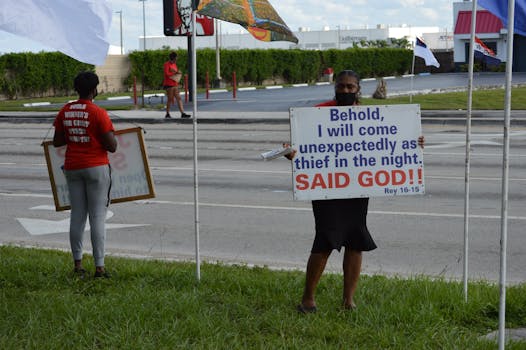
Different Christian Views on the End Times
Futurist and Preterist Perspectives
Christians hold a variety of views about when end‑times prophecies will be fulfilled. The futurist perspective, including premillennialism, sees the kingdom of God as a wholly future reality that will be established after Christ’s return. The preterist perspective, held by Full Preterists, maintains that all the prophecies concerning the end were fulfilled in the first century with the destruction of Jerusalem. A third view, sometimes called “kingdom now” theology, holds that the kingdom is a present reality that believers are called to advance here and now. Each of these frameworks reads the same biblical passages but arrives at very different conclusions.
The Role of Current Events
Current events often prompt fresh discussions about bible prophecy. Some teachers have argued that specific conflicts, such as tensions with Iran, are the prompt the Bible predicted for the end times. Others disagree, noting that the exact timing of the end remains unknown and that no single event can be definitively identified as a prophecy fulfillment. The research available on this topic does not confirm that any particular war or political development is unquestionably the fulfillment of a specific prophecy. Readers are encouraged to examine the relevant sources for themselves and to consider the diversity of views within the Christian tradition.

Frequently Asked Questions
How can I know if a prophecy is fulfilled today?
Believers look to biblical signs and compare them to current events, but no single interpretation is universally agreed upon. Different Christian traditions view fulfillment differently, so it helps to study Scripture alongside trusted teachers and to remain humble about what can be known with certainty.
What is the most important prophecy in the Bible?
Many consider the messianic prophecies about Jesus to be central, as Christians believe He fulfilled them through His life, death, and resurrection. The Second Coming is also seen as a key promise yet to be fulfilled, and it shapes the hope and expectation of believers around the world.
Are the signs of the end times happening now?
Some believers point to wars, famines, and earthquakes as signs of the last days. Others caution that such events have occurred throughout history. The exact timing remains unknown, and Christians are called to remain watchful and faithful regardless of when the end may come.
Why do different Christians disagree on prophecy?
Differences come from how various traditions interpret Scripture. Some read prophecies as future events, others as already fulfilled. Cultural and political factors also shape these interpretations. Studying the original context and consulting a range of trusted teachers can help believers form their own understanding.
Bible prophecy continues to inspire, challenge, and shape the faith of millions. Whether you are exploring it for the first time or seeking deeper insight, the best approach is to read the Scriptures with an open heart and to seek guidance from those who have studied them carefully. The prophetic words recorded in the Bible have stood for centuries, and they still speak to those who are willing to listen.
Next: Trust Jesus: What It Means and Why It Changes Everything
Need Prayer or Personal Counsel?
Pastor Wayne would love to pray with you and speak into your situation.
Book a Session